Broeklin's website
Website


Just north of Brussels, where the highway meets the railway, a 12.5-hectare brownfield tells the story of Belgium's industrial evolution. For decades, this patch of Machelen thrived as a manufacturing hub. Then globalization shifted production elsewhere, leaving behind contaminated soil, empty warehouses, and a community severed from the urban fabric.
The site's challenges run deeper than abandonment. Enclosed by infrastructure on all sides, it suffers from heavy pollution and a near-total dependency on cars. Previous development attempts stumbled over these physical barriers while igniting fierce debates about retail sprawl versus productive futures. By 2018, the site had become a symbol of stalled potential: too valuable to abandon, yet too contested to develop.


When Uplace brought ORG into the conversation, the question wasn't simply how to build, but how to restore. How could this fragmented territory become a catalyst for regional regeneration? And how could circular economies take root in contaminated soil?
ORG has sought to address some of the pressing spatial and socio-economic issues that arose from that division – especially the disconnection of production and consumption, which has resulted in detached markets and isolated populations.

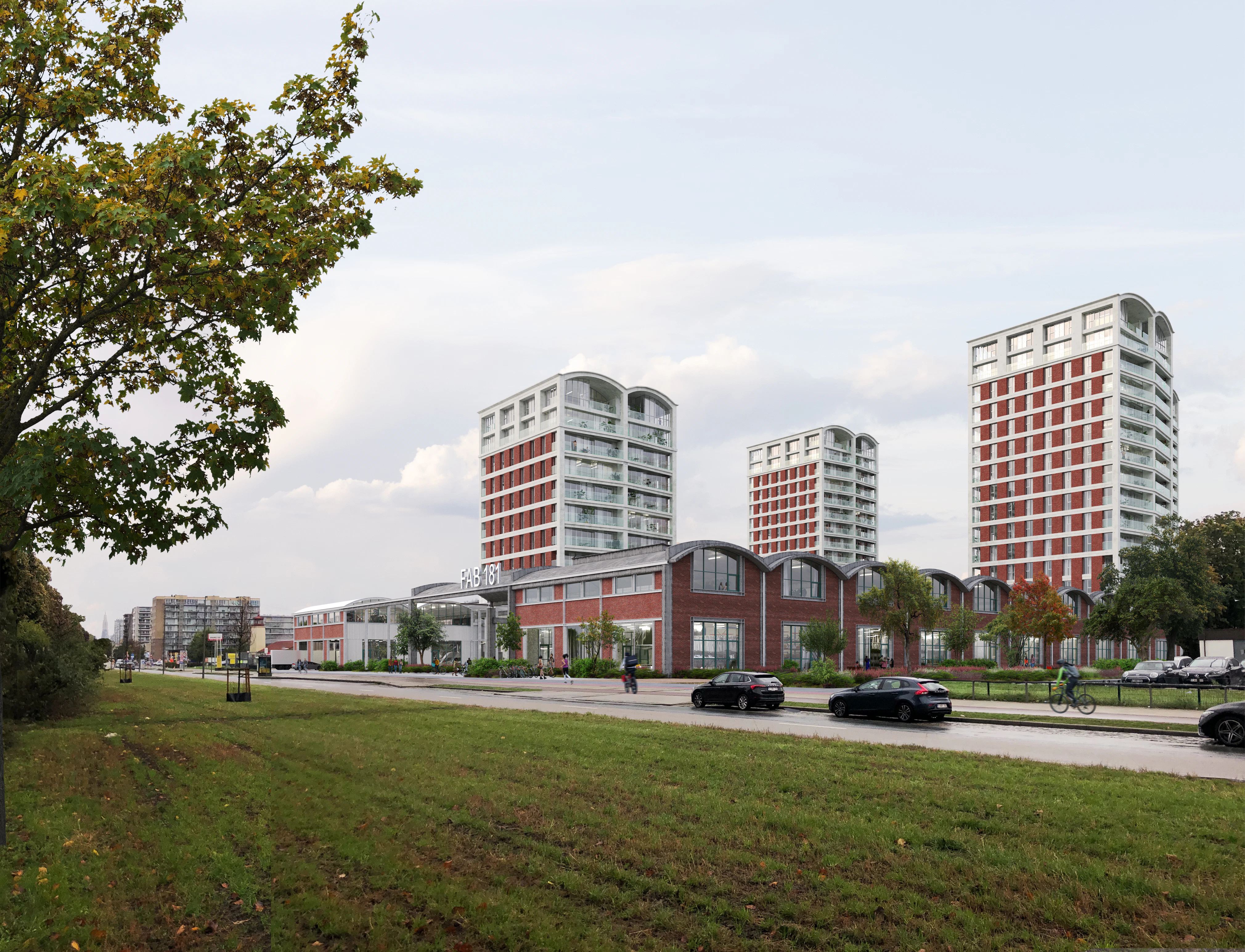
The answer emerged through eighteen months of intensive co-creation. Approved for construction in 2024 and targeted for completion by 2028, Broeklin Brussels aims to reinvest in a neglected territory; stimulate production, innovation and employment; and revitalize an area with a rich and productive history. Production, education, and experience will converge in Belgium's first truly circular economy campus.
A rigorous co-creation process with private stakeholders, regional authorities, private investors and the local community helped ORG transform opposition into opportunity. A contested retail-focused scheme has been replaced with a widely supported vision for a future-oriented economy hub focused on education, local production and manufacturing, balancing financial feasibility with social relevance.

At its core, Broeklin is a 21st-century innovation district organized around short-loop circular economies in food, fashion, beauty and performance. The production-consumption cycle is integrated and renewed within a self-reinforcing ecosystem driven by R&D, prototyping, small runs or singular products, experimental production and product experiences.




Cultural, educational and recreational uses are embedded throughout, promoting a new kind of joined-up relationship between making, learning and experiencing. Three adaptive industrial halls complete with eye-catching exoskeletal structures will all be capable of hosting modular programs.
As one of four projects set to reshape the northern canal zone, Broeklin Brussels also had a responsibility to incorporate an ambitious greening strategy, where large green spaces are left open and linked together.

The development strengthens the regional framework through a restored wadi system that guides the plan’s spatial layout structured around three major zones: Broeklin Square, the Open Woluwe Park and the Dune Garden – each contributing to water retention, biodiversity and climate resilience. The park is designed for ‘Natural Intelligence’ making room for rewilded nature.


At the intersection of people and production, learning and leisure, Broeklin Brussels pioneers a new approach to 21st-century production districts.

Designed as a ‘makers market’, the project creates endless opportunities for interaction between producers and consumers while fostering circular economies that reuse materials across sectors. Food waste from restaurants is reused as a fertilizer for the 3,000 m² rooftop farm. Textile scraps become raw material for fashion start-ups. Wood shavings from furniture makers fuel biomass systems. Rather than a series of isolated businesses, this is a joined-up ecosystem where the metabolism of making becomes visible and valuable.




Designed by Jaspers-Eyers with ORG's programmatic framework, the architecture itself embodies circularity. Each of the three halls include a durable concrete column and beam grid—an open ended framework designed to last for generations—supporting lightweight, circular infill that can be reconfigured as needs evolve.
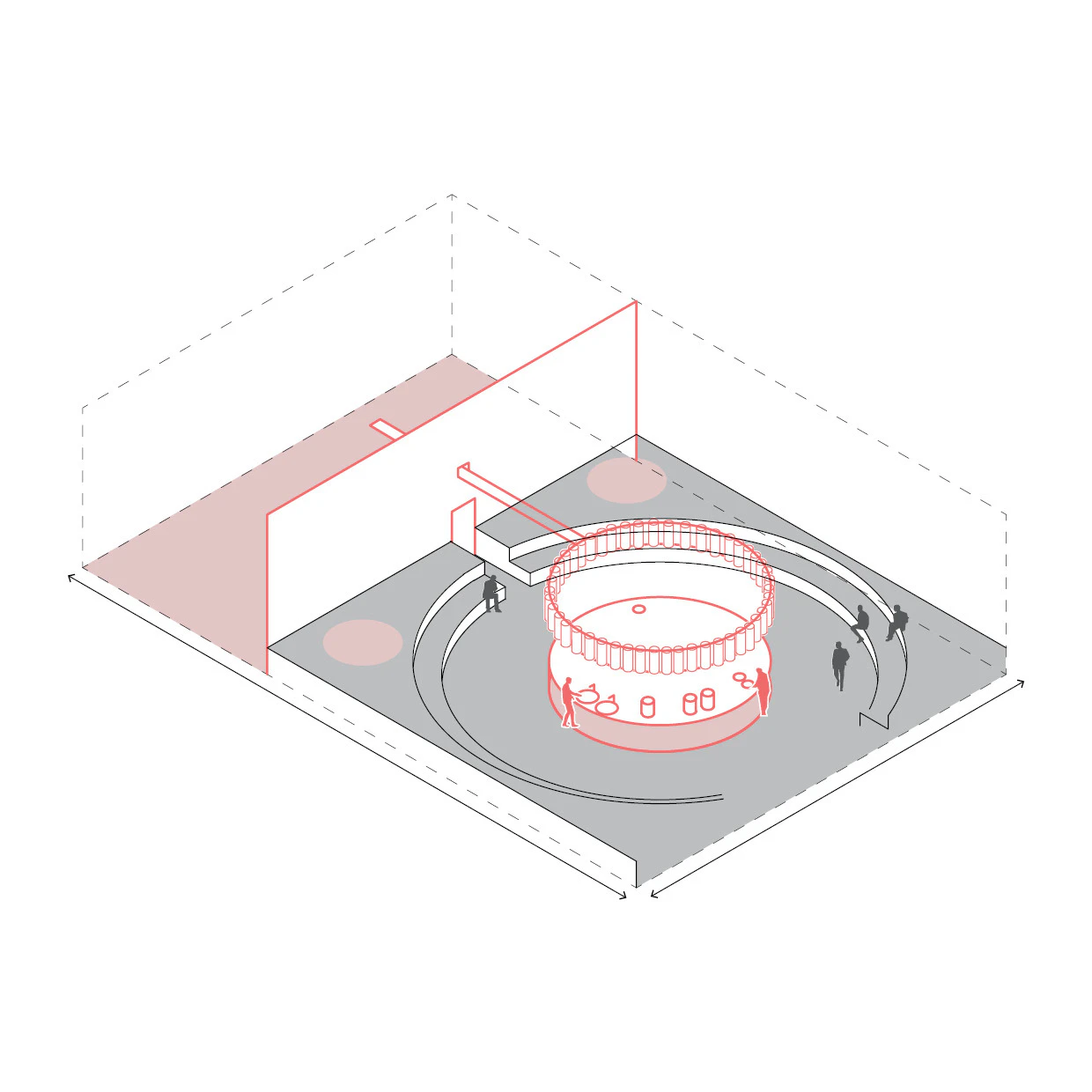
Ground floors remain deliberately porous, with multiple open corridors creating 'productive transparency': visitors can witness making in action while the makers themselves benefit from direct consumer engagement.

Between and around these production spaces, Bureau Bas Smets' landscape strategy turns environmental constraints into amenities. A restored wadi system manages stormwater while creating linear parks. Over 2,000 native trees establish ecological corridors linking to regional green networks. The central Broeklin Square welcomes visitors as Machelen's first true public space hosting markets, events, and casual encounters that transform districts into communities.


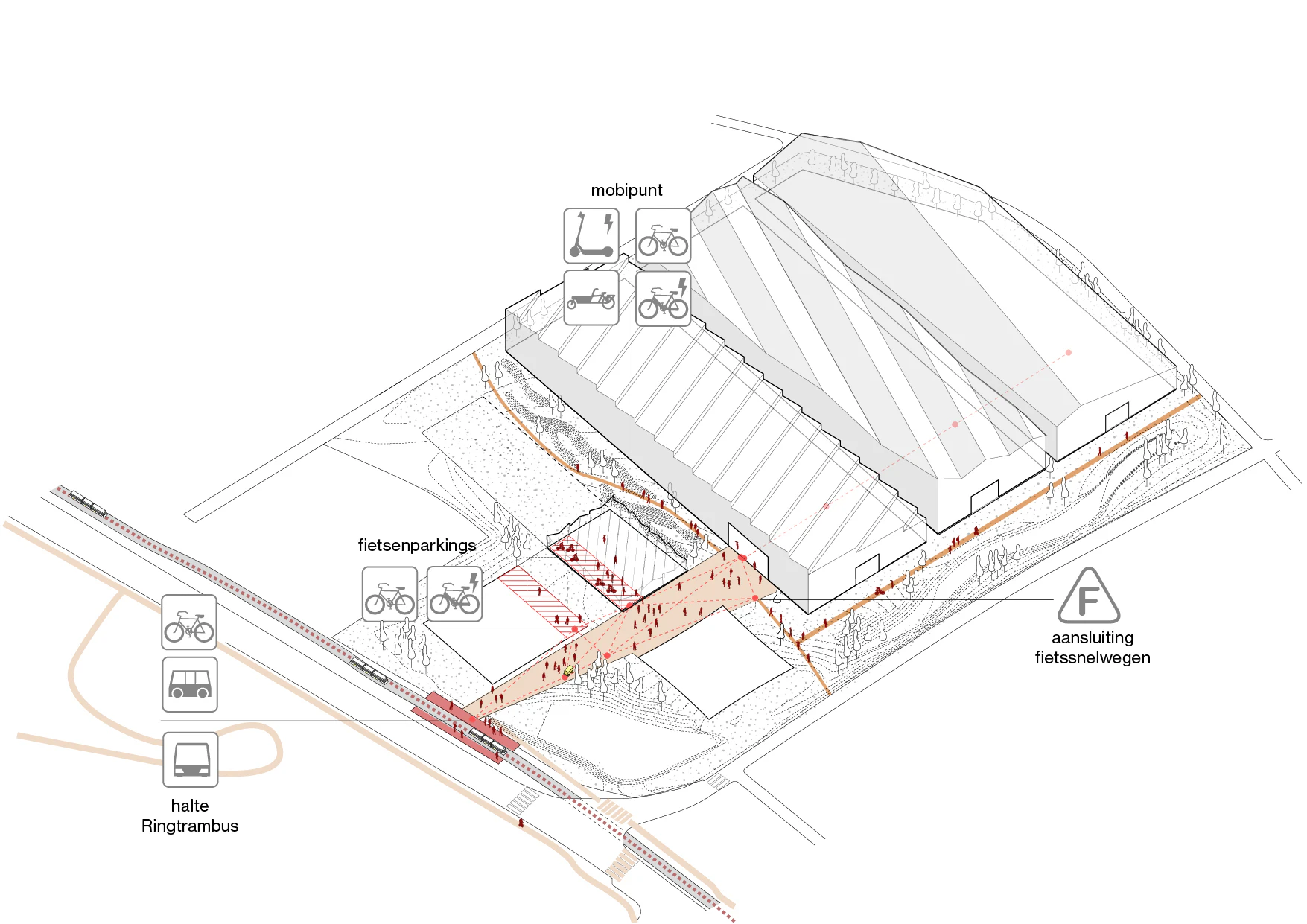
Access to and from the site is being equally transformed. Connections to regional transit investments, including a tram-bus route to Brussels Airport and Vilvoorde station, moves the area away from today’s reliance on cars. Soft traffic networks, meanwhile, will include cycle highways and local paths threading through green public space to create seamless access across the site.

The human element is further emphasized by generous promenades, plazas and paths that support frequent interactions within a "third place" beyond home and work. This is a destination designed to bring people together. A place where social activity thrives. It is also worth noting that a recent study by the VUB estimates the project will create up to 3,250 additional jobs in the neighborhood.