Art Tek Tulltorja wins Holcim Foundation Awards
Award

Post-conflict Pristina faces acute pressure to attract and retain young talent. It lacks the civic infrastructure able to showcase the city’s creative and technological ambitions, not to mention the anchor venues, dedicated workspaces and forums that foster cross-sector collaboration.
At the same time, former industrial zones sit idle – high in spatial potential yet low in accessibility, investment and clarity of use.
For decades after 1947, the Tulltorja brick factory had supplied a substantial portion of Kosovo's bricks, serving as a cornerstone of the nation's construction industry. Its closure left behind a sprawling site that was rich in architectural legacy but disconnected from the city's evolving urban demand.


The location, however, represented a rare chance to anchor these emerging creative and technical ecosystems in a space that honors the past while embracing the future. Without an umbrella spatial strategy, the area risked speculative redevelopment or piecemeal activation.
The site also carried the weight of environmental challenges and previous flooding had damaged many structures. With climate change intensifying extreme weather patterns, any transformation would need to incorporate remediation and resilience measures.


The City of Pristina recognized that revitalizing Tulltorja required more than renovation. It would involve a comprehensive reimagining of how industrial heritage could serve 21st-century innovation. ORG and partners won a competition to develop the Pristina master plan. As the competition entry noted, “This is not just about buildings. It’s about building possibility".
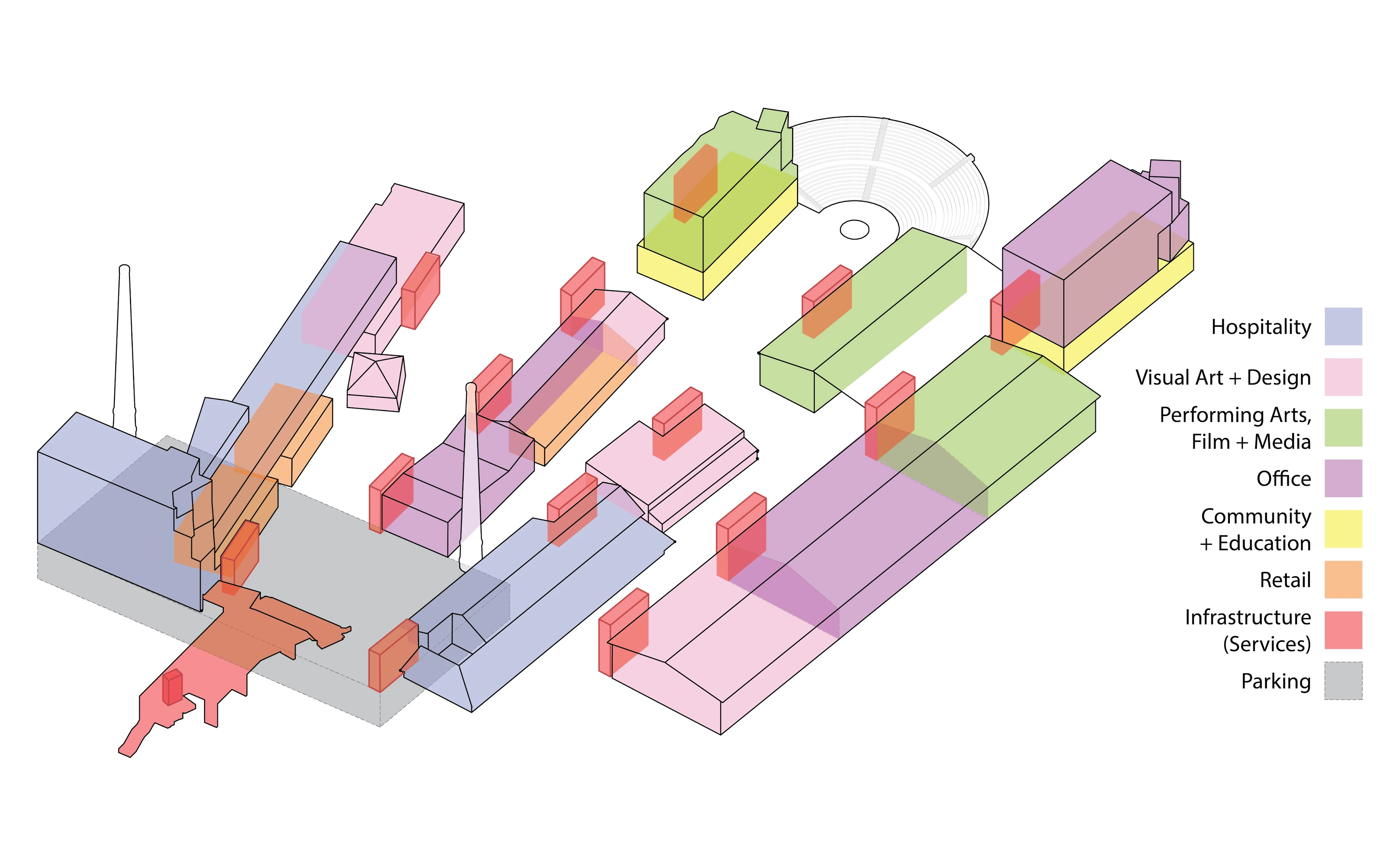

The winning proposal adopts a modular planning framework that preserves the factory's essential character while creating space for contemporary programming. By integrating restored industrial elements, flexible infill cores, sustainable landscaping and targeted investment programming, it is designed to support long-term adaptability and low-carbon operations.
The masterplan divides the site into connected mixed-use zones framed by blue-green infrastructure. Stormwater corridors, parklands and shared surfaces support sustainable mobility, improve accessibility and support microclimate regulation – all while providing climate resilience against the flooding that previously damaged the site.

Each cluster is structured around technical ‘cores’: compact infrastructure bundles that deliver energy, connectivity, water and services across the site. A phased construction, combined with a data-driven tenant strategy, is designed to attract and balance arts, tech, and public sector organizations.

An automated manufacturing system typifies the project's approach to materials. Tull-E is a robotic mini-factory installed on-site to transform the bricks recovered from demolition into new building materials. By creating a circular production process that honors the site's industrial heritage while reducing waste, we are literally building the future from the remains of the past.

The design centers on the strategic preservation of existing smokestacks, kilns and warehouse halls to protect the site’s industrial heritage. These brick structures form linear spaces that define diverse urban areas such as plazas, squares and streets. At the same time, they layer in new, red-colored modular structures to house everything from galleries and workshops to start-up spaces and community facilities.
Mixed-use programming ensures activity throughout the day, from morning co-working sessions to evening cultural events. The integration of housing units creates a genuine live-work environment that supports Kosovo's emerging creative class.


Designed as a 7-minute neighborhood, with residents no more than a 7-minute walk or bike ride away essential daily services and amenities, Art-Tek connects residential and commercial districts while serving as a cultural destination in its own right. The modular logic provides the flexibility for new programs to plug in over time.

Beyond its immediate functions, Art-Tek positions itself as a testing ground for sustainable urban development practices that other post-industrial sites across the region can adapt. The robotic brick recycling process, blue-green infrastructure systems, and modular building approach offer replicable strategies for cities facing similar heritage preservation and climate resilience challenges.


As construction progresses, the project promises to transform not just a neglected industrial site, but Kosovo's entire approach to innovation infrastructure. By centering artistic and technological collaboration within a climate-conscious framework, Art-Tek Tulltorja demonstrates how thoughtful adaptive reuse can generate both economic opportunity and cultural vitality.