
Citycampus in second edition of RIBA book Social Housing
Publication

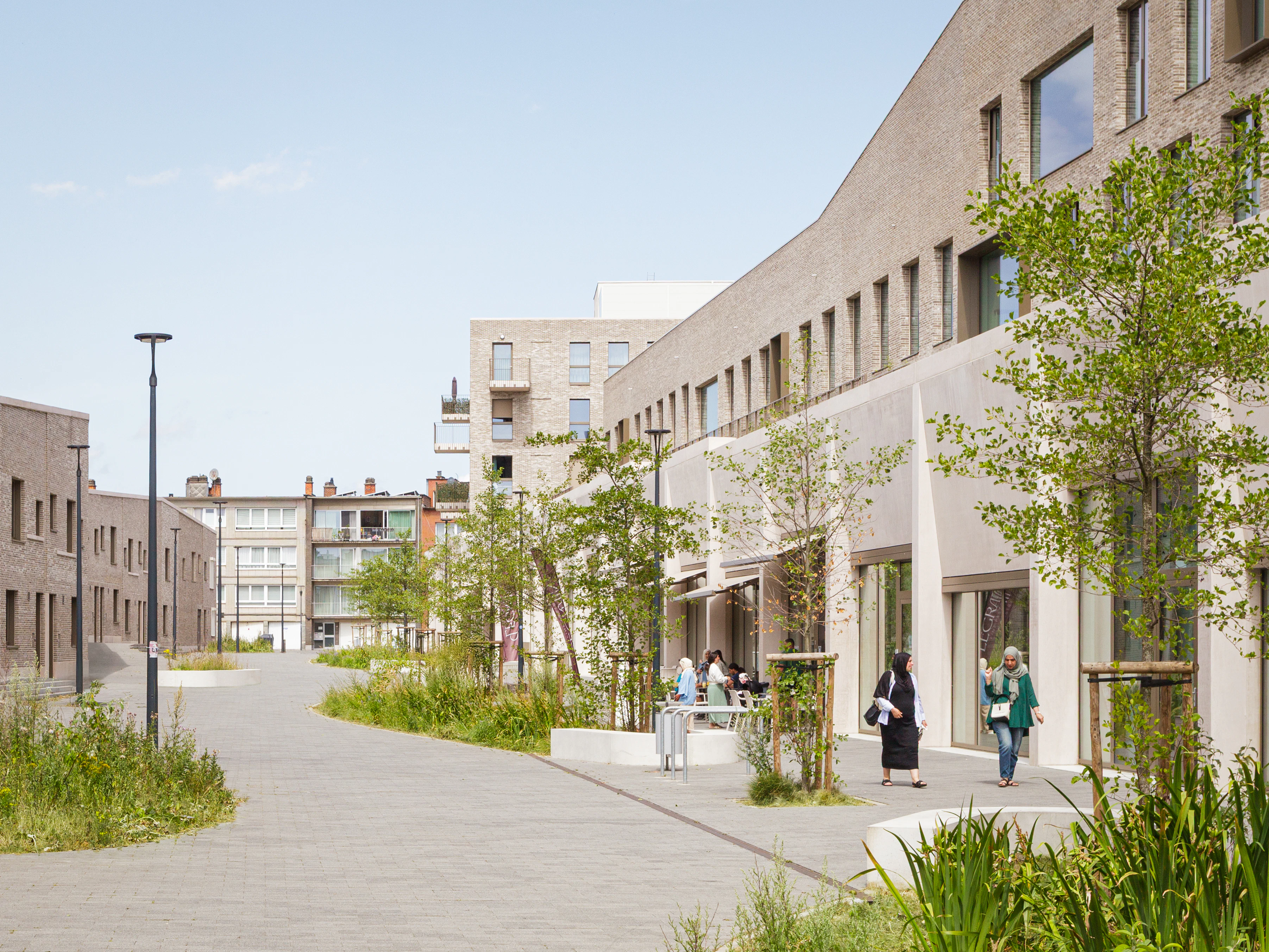
The former Gryson industrial site in Anderlecht sat as a testament to Brussels' manufacturing past.
As cities across Europe grapple with housing shortages and the displacement of productive activities, this 19,500 m²patch of post-industrial land presented a unique opportunity to combine working and living.
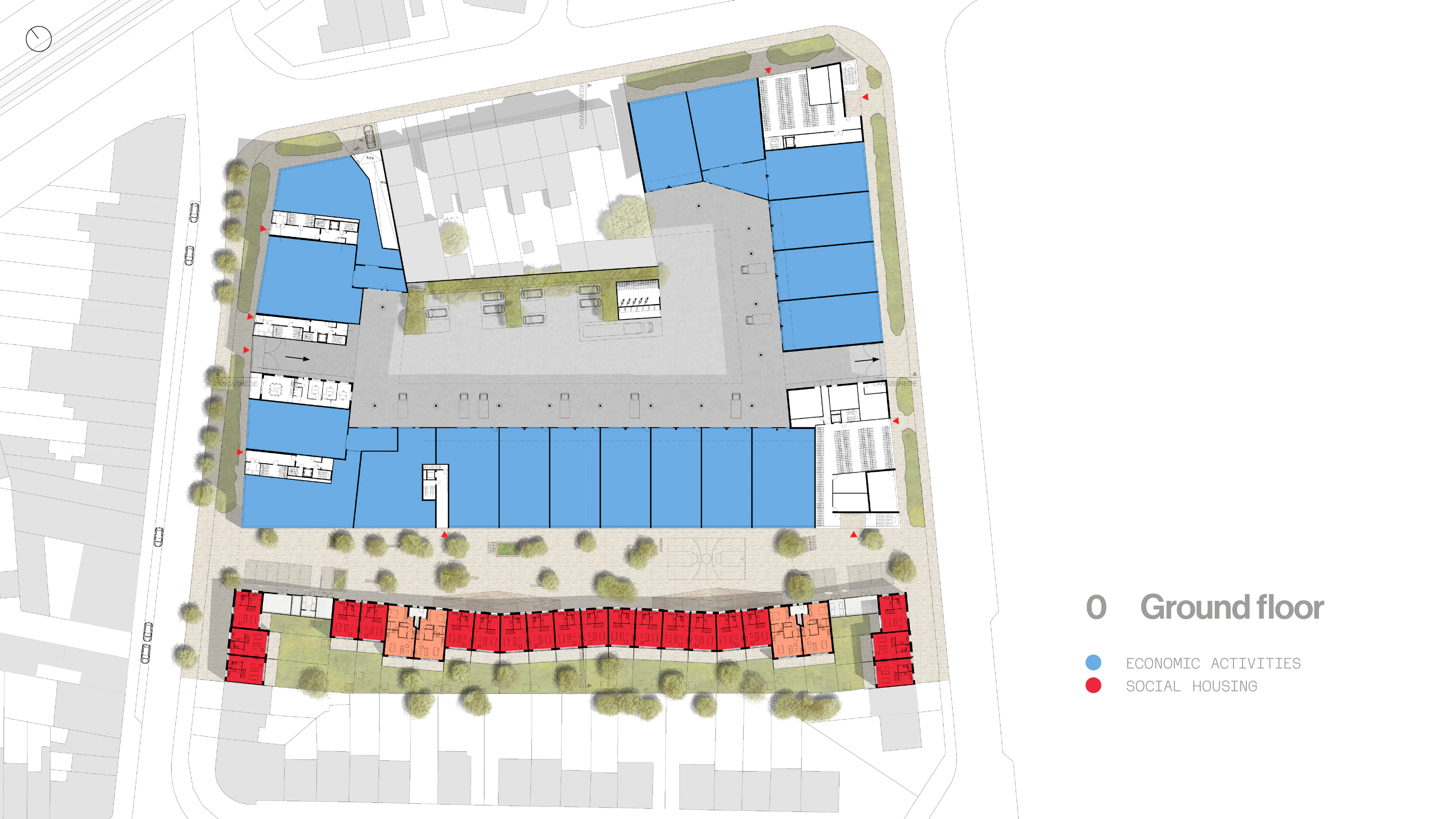
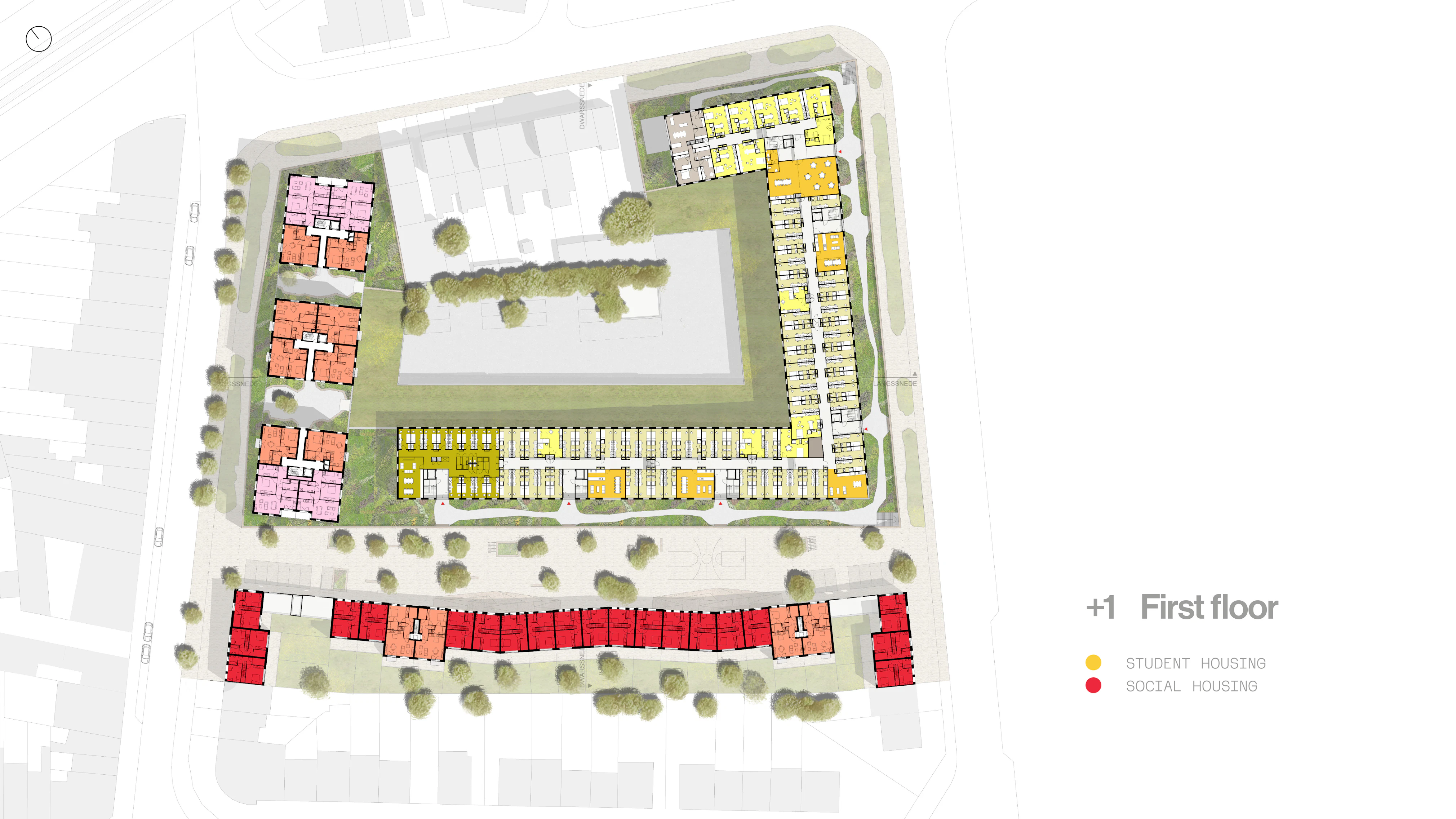
Brussels' Productive City initiative challenges the traditional single-use zoning, encouraging projects that could support the full spectrum of urban life from living to working to community care. The brief called for social housing, student accommodation, food production facilities and social services. All within a compact footprint. And all within a public budget of €38.9 million.

The task required careful spatial calibration to avoid conflicts in circulation, noise, odor nuisance and access. ORG was brought in to craft a spatial strategy able to harmonize high residential densities and sustainability targets while preserving a pedestrian-friendly, socially supportive environment.
The ambition went far beyond simply fitting everything in. It was about creating a place where neighbors could cross paths, where students could encounter local food makers, and where the hum of productive activity could enhance rather than disrupt daily life.
The project required a layered approach that could balance competing spatial, economic, and social demands. Deploying a two-part structure, the design features a modular, multifunctional base together with a set of residential sections scaled for comfort and connectivity.
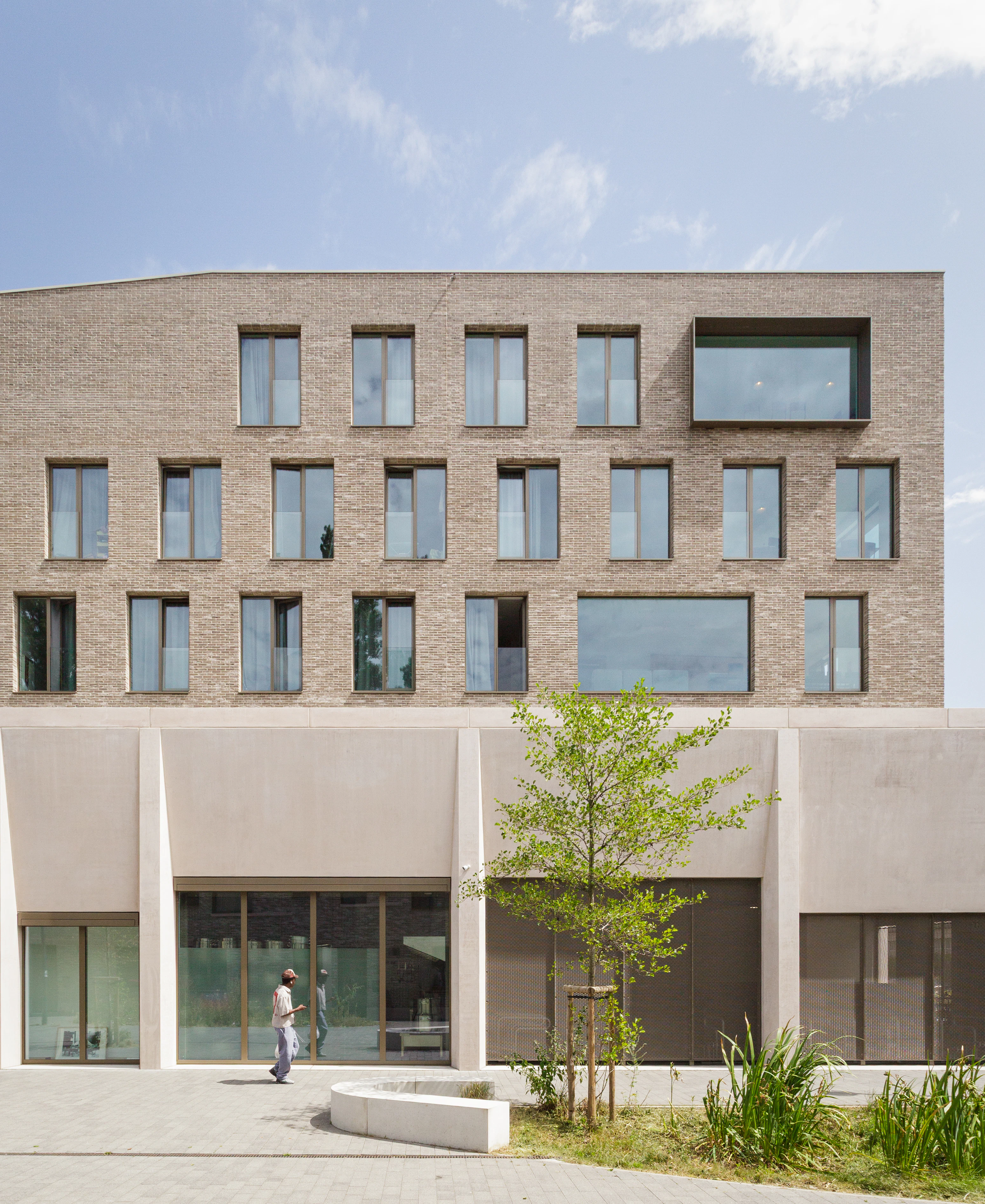


Ground-floor workshops, directly accessible from the street and serviced from a rear maneuvering lane, are partially covered by a green canopy for noise control. The layout supports urban logistics while maintaining a clean, active façade.
The car-free central street, meanwhile, acts as a social spine. The public space at the center of the development is designed to foster interaction by linking entrances, gardens, and circulation while reinforcing continuity within the neighborhood. We set back higher residential sections to preserve sunlight and scale transitions at street level.
The resulting two-part structure features a modular, multifunctional base together with a set of residential sections scaled for comfort and connectivity. Ground-floor workshops, directly accessible from the street and serviced from a rear maneuvering lane, are partially covered by a green canopy for noise control. The layout supports urban logistics while maintaining a clean, active façade.

Citycampus redefines the traditional block model to support density, diversity and social infrastructure in a coherent, people-first form.
It seamlessly weaves together making, living, and care across two distinct zones connected by a pedestrian-centered public street that acts as the project's social spine.

Taller housing is set back to reduce impact on the street, maximizing light and the feeling of space while allowing rooftop gardens to act as thriving communal zones. This enhances passive interaction between residents and improves environmental performance.
The project also embeds social services such as a youth services center and generous communal areas, ensuring that care infrastructure is visibly integrated into the residential fabric to promote inclusion.
Particular attention was placed on creating active, safe public spaces completely separated from the workshops’ logistical access.


Completed in 2023, the project demonstrates that urban blocks can nurture flourishing businesses and a flourishing community. By embracing complexity rather than simplifying it away, Citycampus offers a template for cities seeking to weave production back into the urban fabric without sacrificing the qualities that make neighborhoods livable.


