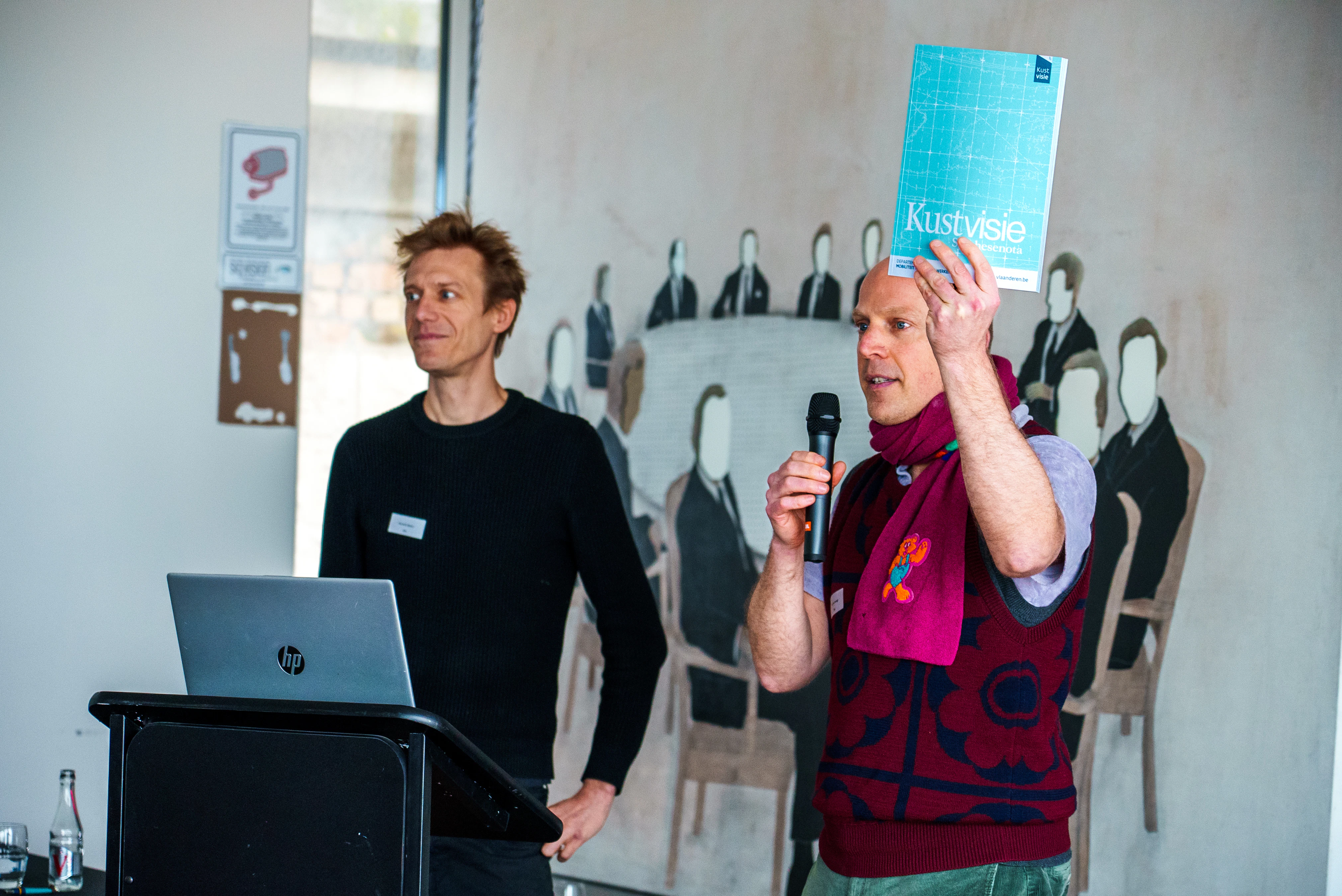
Coastal Vision report by ORG
Report
Belgium's 67-kilometer coastline pulses with life. Ten coastal municipalities stretch along this compact shore, each home to seaside resorts and apartment buildings that face directly onto the sea. Four major industrial and recreational ports, nature reserves, heritage sites, fishing grounds, and military zones are interwoven throughout this dense coastal tapestry.
But the sea is rising. A source of leisure and livelihoods, it now also threatens everyday life. Global warming is forecast to raise sea levels by a full meter by 2100, with IPCC projections warning of potential increases up to three meters in worst-case scenarios.

The challenge runs deeper than rising water levels. Coastal towns, ports, tourism operators, ecological zones and municipalities each operate to their own specific agendas, often at odds with one another. After a decade of opposition and stalled progress, Belgium needed a breakthrough approach that could forge consensus across these diverse, sometimes competing interests to secure funding and political support. Critically, any action taken today could not be allowed to compromise the freedom of choice for the generations of tomorrow.

Over two years, we conducted a co-creative design process that involved more than one hundred professional and political stakeholders in addition to NGOs, interest groups, and representatives from neighboring countries France and the Netherlands.

Built on three interconnected pillars, the process aimed to narrow down eight alternatives to a single, fully supported option and transform conflict into collaboration.
We referred to a comparative model, testing each option against hydromorphological, nautical, technical, ecological, economic and social criteria (fisheries, tourism, housing, defense, enterprise). The analysis quantified impacts and cross‑checked results to clarify trade‑offs and guide a coherent direction.
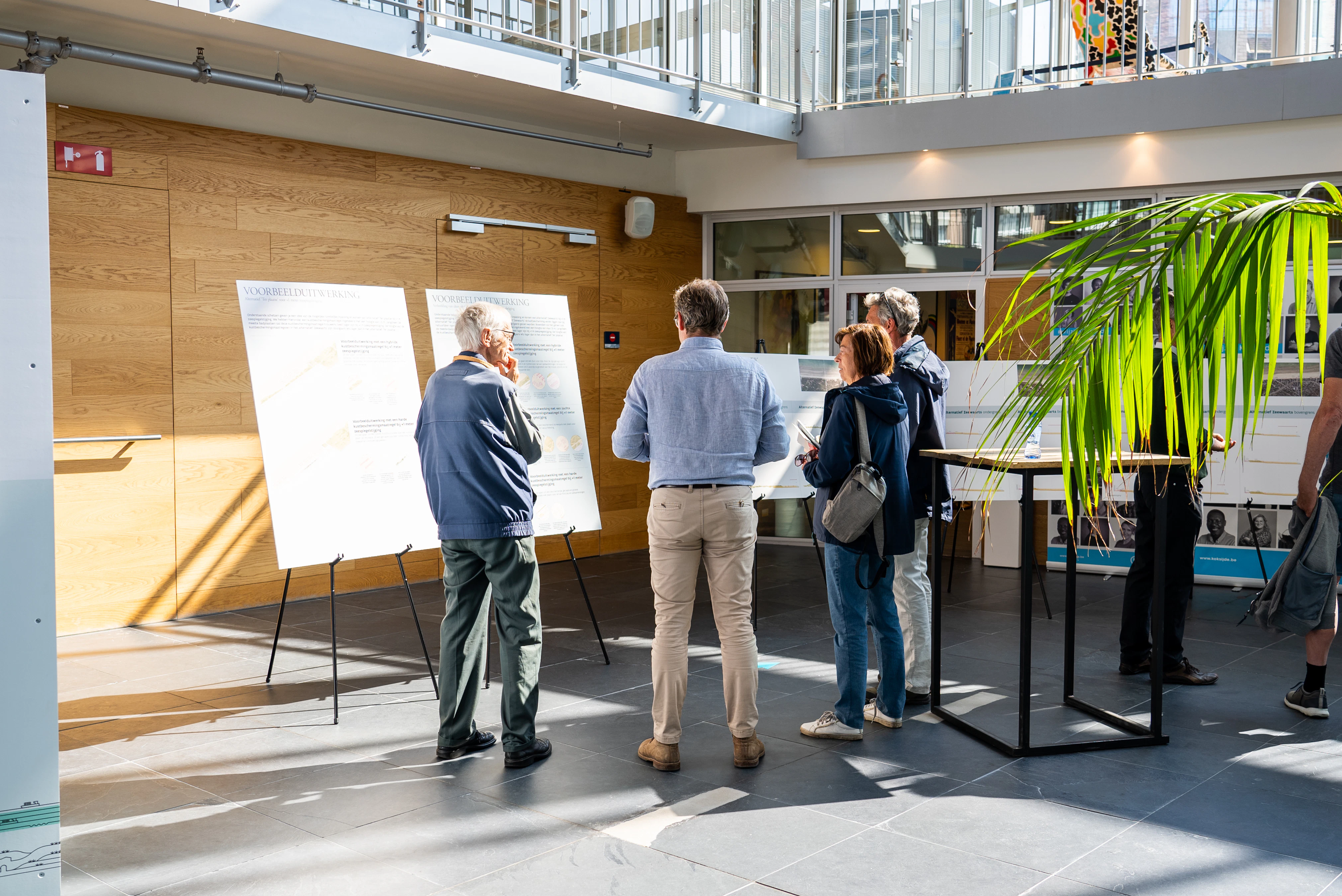
Second, we created integrated spatial designs for each alternative. Visualization made the accompanying opportunities and challenges tangible and easy to understand, transforming abstract policy into concrete possibilities. Through detailed diagrams and roadmaps, stakeholders could see how different approaches would reshape their familiar coastline.
Third, we developed, refined, and narrowed down the alternatives in workbench sessions in partnership with stakeholders representing municipalities, ports, federal and regional agencies, tourism, recreation and nature organizations.



This three-pronged approach proved transformative. Our co-creative process gave every voice a seat at the design table, arrived at a technically rigourous and socially acceptable solution, that broke a decade of gridlock.


The Kustvisie is designed to counter extreme sea level rise of up to three meters through a set of adaptive spatial space and design strategies that can scale over time.

The breakthrough vision centers on a protective ‘Ribbon’. Rather than a single fixed barrier, this narrow, multifunctional coastal zone offers the flexibility to implement different adaptation strategies over time. Accommodating protective infrastructure while also supporting ecological regeneration, tourism development and public space access, we ensure that safety, livability and spatial quality will evolve in harmony.

Beyond flood safety, the Ribbon integrates habitat restoration, soft mobility corridors and beachside public amenities. It provides space for dune expansion, wetland reactivation and nature-based flood buffers. And at the same time, it enhances the coastal economy by improving walkability, recreational infrastructure and coastal programming. In doing so, the vision transforms climate adaptation into an opportunity for long-term spatial and economic renewal.


The design has been calibrated across multiple risk scenarios, enabling local municipalities and agencies to implement protection measures according to the evolving climate projections and development pressures. Allowing a gradual, context-specific response to rising sea levels, the strategy scales from on-site reinforcement to full seaward expansion.

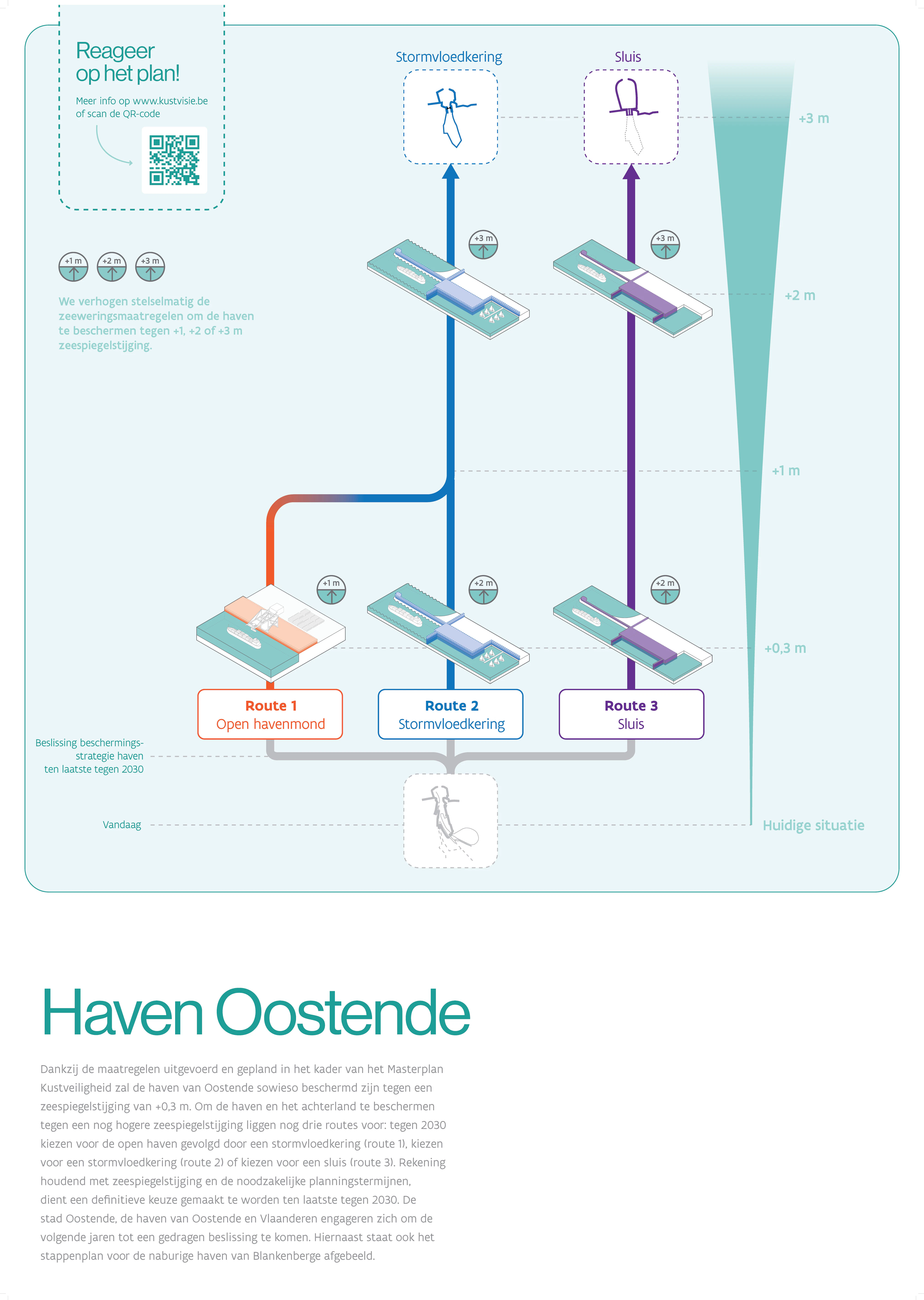
Tailored roadmaps for each of Belgium's four coastal ports indicate when specific measures must be implemented based on the principal of no-regret, whereby the choices we make today cannot compromise freedom of choice for future generations.


We have also developed a new governance structure reflective of the evolving needs for climate adaptation and better capable to implement the project. A Coastal Vision director team ensures all viewpoints are fairly represented. The team is supported by a political governance structure that includes experts on coastal protection, spatial planning, ecology and heritage. This institutional framework transforms the collaborative process into lasting organizational capacity.

The approach has already gained international recognition. Belgium has become the first country worldwide with a coastal protection strategy against 3-meter sea level rise, establishing a new standard for comprehensive climate adaptation planning.